
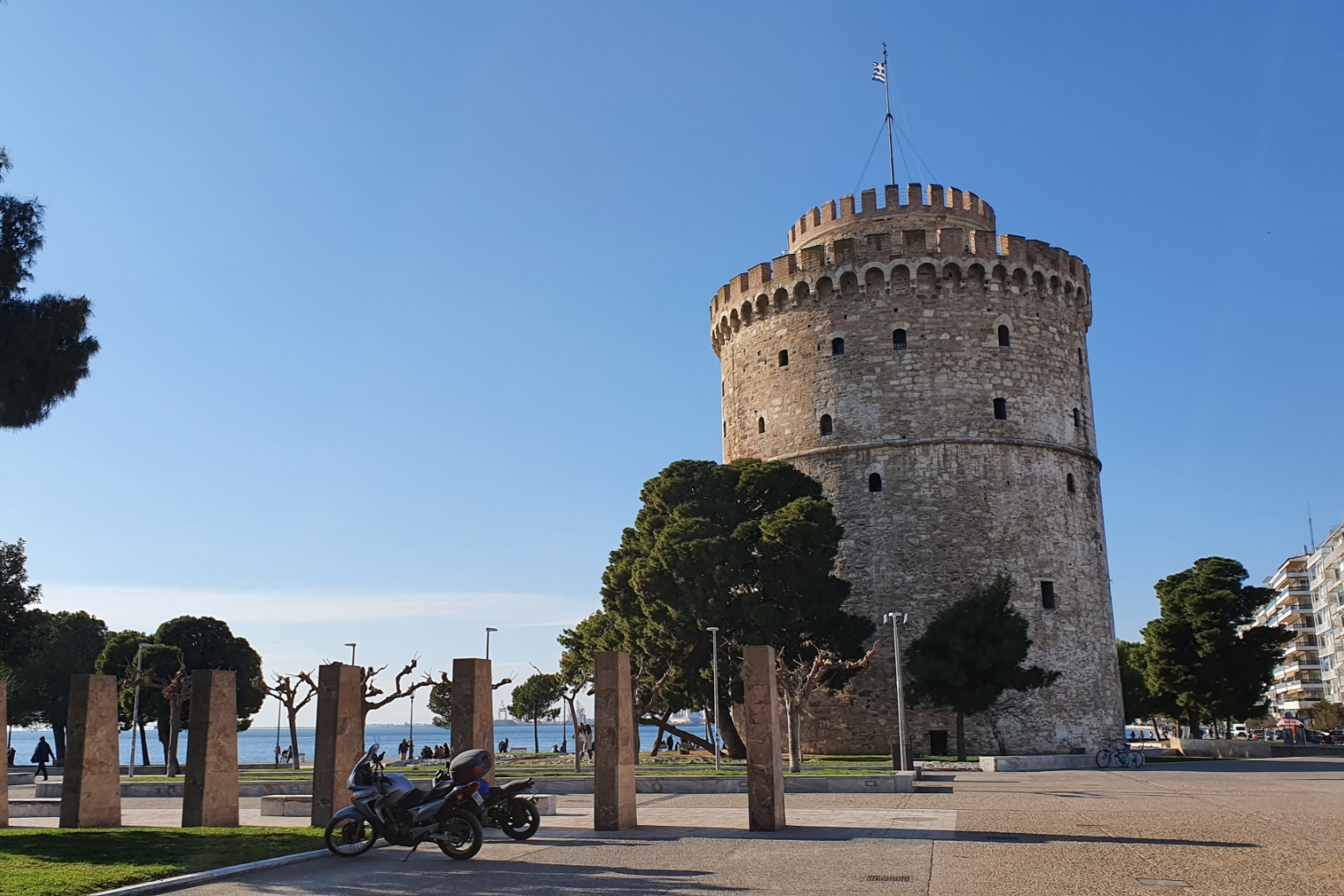
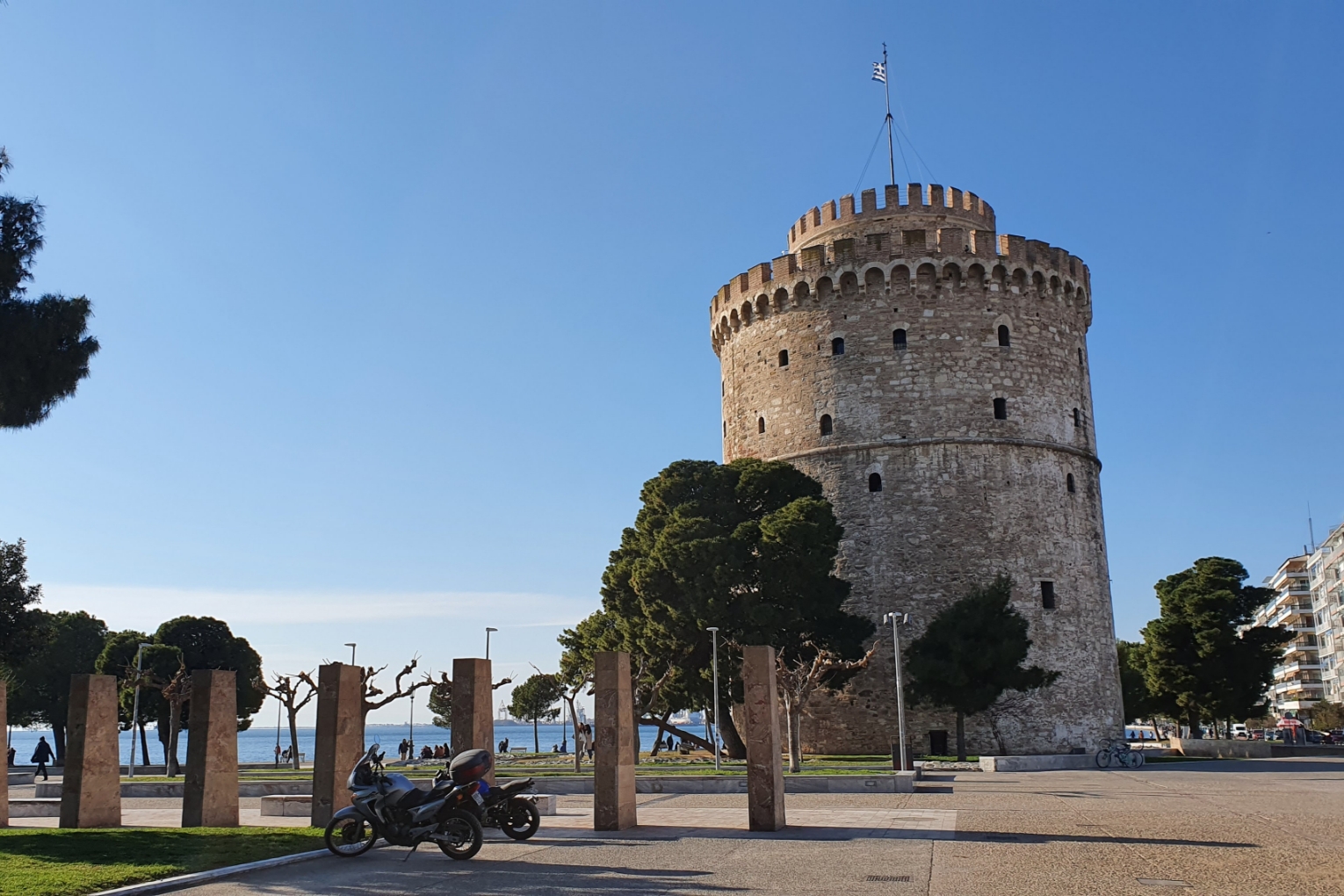
The city of Thessaloniki was built in 315 BC and took its name from the wife of King Cassander and sister of Alexander the Great. It is hospitable and alive, enchanting every traveler who will visit the city or be there for a few hours. With more than 2,000 years of history – Hellenistic, Roman, Byzantine, Ottoman and modern and the wealth of archaeological sites is astounding for all ages.
The choices of entertainment, restaurants, cafes and nightclubs to alternative hangouts, from the main streets to the picturesque alleys, is plenty in order to satisfy all the needs and desires.
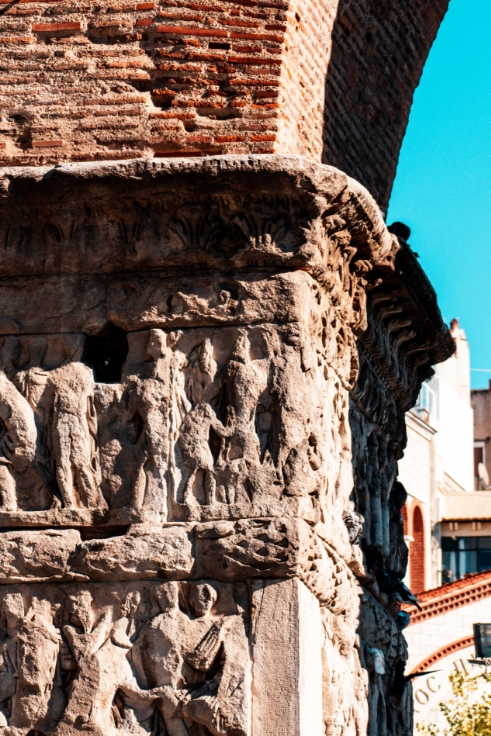
The arch of Galerius also known as “Kamara” is one of the most recognizable and distinguished Roman monuments of Thessaloniki. It is perhaps the most popular destination for both locals and visitors to the city.
As the arch was part of the wider architectural complex that included the Palace and the impressive cylindrical building of the Rotunda in a single entity, we can perceive the rich and intense Roman past of the city.
Kamara is the most common meeting point for most locals and the city’s impressively large student community. It is accessible from Egnatia Street, while many other attractions and areas that deserve your attention are within walking distance.
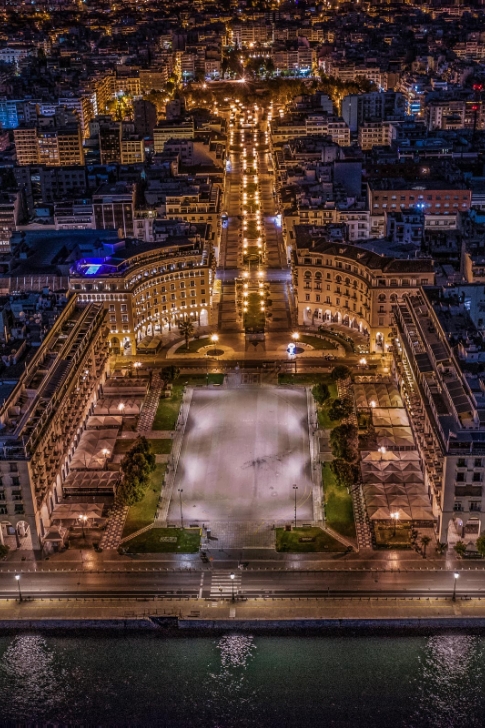
Aristotelous Square is one of the central squares of Thessaloniki. It was designed by the French architect Ernest Hebrard in 1917 immediately after the great fire of 1917. It starts from the semi-circular buildings to the north of Mitropoleos Street continuing to Nikis Avenue in the sea.
The square is a popular spot for tourists and locals as it has many cafes and restaurants and it is a venue for political gatherings and various artistic events. Just above the square, remains of the Roman Agora were discovered and is a place of attraction for many tourists.
The area of Thessaloniki known as the Upper Town is built in the northwest of the city. It is a large part of the Byzantine walls that remained intact from the great fire of 1917.
Its cool microclimate allows visitors, even in the hottest summer months, to wander the cobbled streets surrounded by small beautiful Ottoman architecture houses. It’s a great opportunity for every visitor to enjoy the amazing panoramic view of the city and the sea from above, especially during the hours of sunset. The boundaries of the Upper City include some of the most important monuments of Thessaloniki such as Eptapyrgio, the church of Saint David, the Monastery of Vlatadon, Alantza Imaret, the temple of Taxiarches and many others.
Dine in the small taverns with traditional cuisine, some of them are more than a century old! You can also find souvenirs in small tourist shops in the area, near Portara and the Trigonio Tower.
For city dwellers, walking (and in recent years running) along it is a favorite habit.
The walker will enjoy the sun, the sea and the sky of Thessaloniki, across the 35hm of the seaside. It has a demarcated space for cyclists from the Concert Hall to the port.
Visitors walking along it will have the opportunity to admire the impressive umbrellas of Zongolopoulos, the statue of Alexander the Great, the statue of K.Karamanlis, the Royal Theater and the green theme parks. Those who are more romantic, can enjoy a ride with the 4 seater bike or drink their coffee on the boats.
It is located on the eastern side of Thessaloniki and is one of the best destinations if you want to get away from the center of Thessaloniki for a while. The pedestrian street is always bustling as it has its own famous shops and stores. Nea Krini stands out for its beautiful marina where it is an excellent place for a walk, while fish taverns and cafe bar restaurants there offer a wonderful view of the sea to whoever chooses to sit in one of them.
Seich Sou is the large peri-urban forest of Thessaloniki with an area of 30,000 acres and is the lung of Thessaloniki. Its location is just 15 minutes away from the city center and therefore has many residents visiting it. Its name comes from the Turkish “Seyh su” which translates as “Seich’s water” because of the water fountain that existed in a Muslim monument in the area.
The paths with natural beauty lead the visitor to points with a unique view of the city, the Gulf of Thermaikos and perhaps even Mount Olympus.
It offers many activities like walking, cycling and picnicking in a green environment… one of the well-kept secrets of Thessaloniki that challenges active and discerning visitors to discover it.
Since 1923 when the first residents settled, Peraia has changed a lot and transformed from a small refugee village into a nearby and accessible tourist destination, reminiscent of Halkidiki.
Guests can enjoy fresh fish, seafood and ouzo appetizers with local tsipouro and wine, next to the sea with the view of Thermaic Gulf and the city.
The arch of Galerius also known as “Kamara” is one of the most recognizable and distinguished Roman monuments of Thessaloniki. It is perhaps the most popular destination for both locals and visitors to the city.
As the arch was part of the wider architectural complex that included the Palace and the impressive cylindrical building of the Rotunda in a single entity, we can perceive the rich and intense Roman past of the city.
Kamara is the most common meeting point for most locals and the city’s impressively large student community. It is accessible from Egnatia Street, while many other attractions and areas that deserve your attention are within walking distance.
Aristotelous Square is one of the central squares of Thessaloniki. It was designed by the French architect Ernest Hebrard in 1917 immediately after the great fire of 1917. It starts from the semi-circular buildings to the north of Mitropoleos Street continuing to Nikis Avenue in the sea.
The square is a popular spot for tourists and locals as it has many cafes and restaurants and it is a venue for political gatherings and various artistic events. Just above the square, remains of the Roman Agora were discovered and is a place of attraction for many tourists.
The area of Thessaloniki known as the Upper Town is built in the northwest of the city. It is a large part of the Byzantine walls that remained intact from the great fire of 1917.
Its cool microclimate allows visitors, even in the hottest summer months, to wander the cobbled streets surrounded by small beautiful Ottoman architecture houses. It’s a great opportunity for every visitor to enjoy the amazing panoramic view of the city and the sea from above, especially during the hours of sunset. The boundaries of the Upper City include some of the most important monuments of Thessaloniki such as Eptapyrgio, the church of Saint David, the Monastery of Vlatadon, Alantza Imaret, the temple of Taxiarches and many others.
Dine in the small taverns with traditional cuisine, some of them are more than a century old! You can also find souvenirs in small tourist shops in the area, near Portara and the Trigonio Tower.
For city dwellers, walking (and in recent years running) along it is a favorite habit.
The walker will enjoy the sun, the sea and the sky of Thessaloniki, across the 35hm of the seaside. It has a demarcated space for cyclists from the Concert Hall to the port.
Visitors walking along it will have the opportunity to admire the impressive umbrellas of Zongolopoulos, the statue of Alexander the Great, the statue of K.Karamanlis, the Royal Theater and the green theme parks. Those who are more romantic, can enjoy a ride with the 4 seater bike or drink their coffee on the boats.
It is located on the eastern side of Thessaloniki and is one of the best destinations if you want to get away from the center of Thessaloniki for a while. The pedestrian street is always bustling as it has its own famous shops and stores. Nea Krini stands out for its beautiful marina where it is an excellent place for a walk, while fish taverns and cafe bar restaurants there offer a wonderful view of the sea to whoever chooses to sit in one of them.
Seich Sou is the large peri-urban forest of Thessaloniki with an area of 30,000 acres and is the lung of Thessaloniki. Its location is just 15 minutes away from the city center and therefore has many residents visiting it. Its name comes from the Turkish “Seyh su” which translates as “Seich’s water” because of the water fountain that existed in a Muslim monument in the area.
The paths with natural beauty lead the visitor to points with a unique view of the city, the Gulf of Thermaikos and perhaps even Mount Olympus.
It offers many activities like walking, cycling and picnicking in a green environment… one of the well-kept secrets of Thessaloniki that challenges active and discerning visitors to discover it.
Since 1923 when the first residents settled, Peraia has changed a lot and transformed from a small refugee village into a nearby and accessible tourist destination, reminiscent of Halkidiki.
Guests can enjoy fresh fish, seafood and ouzo appetizers with local tsipouro and wine, next to the sea with the view of Thermaic Gulf and the city.
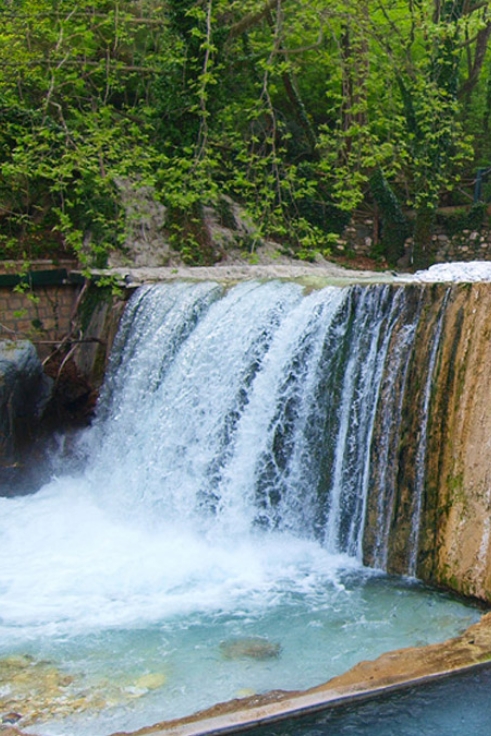
Thessaloniki is surrounded by beautiful landscapes and places of natural beauty for nearby day trips from the city.
Southeast of Thessaloniki and at a distance of less than 20 kilometers is the village and Mount Chortiatis. With its enchanting scenery, it attracts visitors all year round for hiking through the trails that lead to the refuge, for snowshoeing in the winter months and fruit picking in the spring. Combine your activities with a walk in the village where you will come across the holocaust memorial. Complete your excursion with food from the tavernas located on the main street of the village or at Aelios Petra where you will enjoy not only very good food and coffee but also a vast view of the mountains and the entire city of Thessaloniki unfolding ahead.
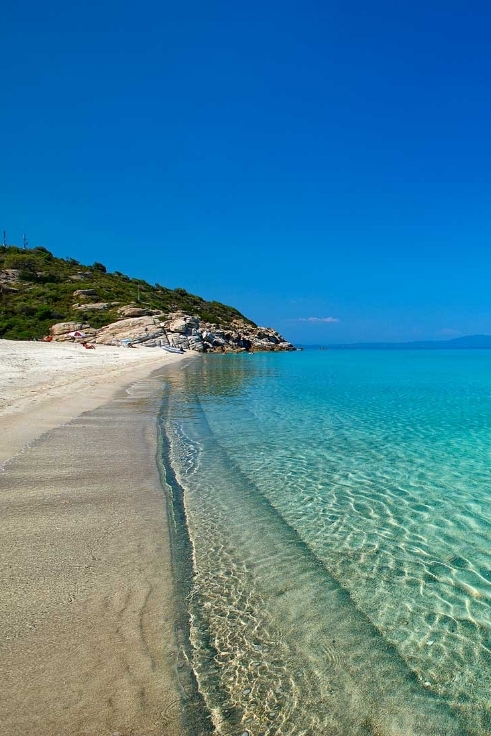
If you are in the city during the summer, you should definitely include a trip to the beautiful and green beaches of Halkidiki. The total length of the coastline reaches 500 kilometers with beautiful beaches, idyllic scenery and many options for entertainment. For years Halkidiki has been an ideal holiday destination for every visitor, from the cosmopolitan Kassandra to the enchanting and quiet Sithonia.
The abundance of archaeological sites and the centuries-old religious and ecclesiastical tradition of Mount Athos attract thousands of visitors every year on archaeological and religious quests.
Of course, don’t underestimate the mountainous side of Halkidiki as its beautiful villages hidden in Holomontas such as Arnaia with its picturesque narrows and Taxiarchis with its famous souvlaki can enchant you!
The Petralona Cave is a prehistoric cave that was discovered by a shepherd of the area and a resident of the Petralona Community, Filippos Hatzaridis in 1959. Another resident of the Petralona community, Christos Sarigiannidis, later found the famous skull of Archanthropus, the oldest European, dating back 700,000 years. Decorated with stalactites and stalagmites in various formations and red hues, the cave was the residence of our ancestors and was even used as a shelter during the Ice Age.
A stone’s throw from Thessaloniki, there are beautiful lakes of Northern Greece waiting for you to explore them.
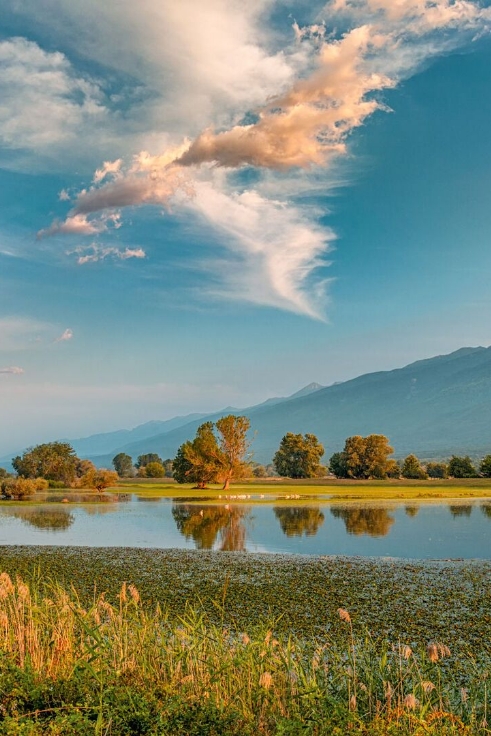
Lake Kerkini, 100 km from Thessaloniki, was created by human intervention in 1932. The riverside vegetation with riverside forests of wild willows, water lilies, a wide variety of fish, buffaloes and the magnificent horizon from the mountains, give the place a unique charm and peace of mind to its visitors.
Lake Skra is located just outside of Kilkis, in a jungle-like forest. The characteristic stalactites and stalagmites as well as the crystal clear blue-green waters together with the waterfalls compose an impressive scenery. In the summer, its cool waters are suitable for swimming, while the wooden benches of the Goumenissa Forest Park are suitable for rest and picnics.
Lake Volvi is located east of the city, at a distance of 35 km and is an excellent wetland where many activities can be done, even surfing thanks to the permanent tide.
It was systematically excavated to its greatest extent and scientifically studied during the second half of the twentieth century. Regarding the historical route of Pella, in the first years of the city being the capital of the Macedonians, it was connected with the reign of Archelaus. Impressive colonnades, mosaics that take you back centuries and an area of about 70 acres that was once full of life and culture. The Archaeological Museum of Pella is actually a micrograph of the archaeological site.
Just one hour away from Thessaloniki is the capital of the Macedonian state (around 400 BC) excavated by Manolis Andronikos. The royal tombs of Vergina (ancient Aiges) take every visitor to the center of the famous Kingdom of Macedonia, which dominated in Greece and beyond, in the 4th century BC.
The Macedonian king Philip II lived and died here from 382-336 BC. and here his son, Alexander the Great, was crowned king shortly before he began building his legendary empire.
Today the tomb of King Philip II of Macedonia, the palace, the theater of the Goats, the tombs of the queens, the imposing ruins of the ancient palace under the acropolis, the foundations of Hellenistic houses and part of the wall as well as excellent and valuable ancient objects are preserved, such as the golden urn, golden wreaths, golden jewelry, etc.
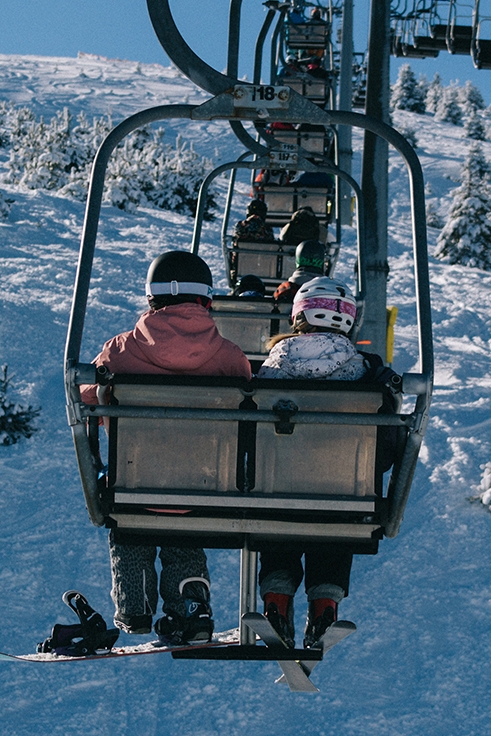
If you are a fan of winter sports don’t miss visiting the nearby ski resorts for a day trip.
The ski center 3-5 Pigadia, Seli, Elatochori and Kaimaktsalan offer ski slopes that vary in degree of difficulty so that all visitors can find the one that suits them, while the artificial snow system ensures excellent snow quality during the entire winter season. A last number of other activities such as hiking, mountaineering, mountain biking and paragliding being prime examples are also available for the visitor to try.
The residence of the twelve Gods of ancient times is the highest mountain in Greece and the second highest mountain in the Balkans with a total of 52 peaks from 760 to 2918 meters. It is recognizable for its ecological characteristics and unique natural beauty, as well as for its connection with ancient Greek mythology, not only in Greece, but also in Europe and worldwide. In 1981, UNESCO declared Olympus a “Biosphere Reserve”.
Litochoro is a popular village for those wishing to start climbing Mount Olympus.
With its chalet-like buildings, long streets and streams, it brings the atmosphere of a Swiss village.
A few kilometers from the area of Litochoro is the Holy Monastery of Agios Dionysios in Olympus, and the archaeological site of Dio.
The sacred city of the Macedonians located in the foothills of Mount Olympus and host the museum, the ruins of various buildings of the city, the former baths and WC with preserved toilets and a renovated amphitheater.
A unique destination for rest and rejuvenation for young and older visitors are the Pozar baths, where the thermal waters that spring from the mountain have a constant temperature of 37 degrees Celsius creating ideal conditions for relaxation. The landscape is impressive thanks to the dense vegetation around the waterfalls and the natural pools which in combination with all the necessary amenities provided in the area such as hotels, restaurants and changing rooms give the visitor a unique travel experience.
They are 109 km from Thessaloniki and in the wider area the visitor has the opportunity to walk the gorge of Loutra and enjoy the speleological park.
Thessaloniki is surrounded by beautiful landscapes and places of natural beauty for nearby day trips from the city.
Southeast of Thessaloniki and at a distance of less than 20 kilometers is the village and Mount Chortiatis. With its enchanting scenery, it attracts visitors all year round for hiking through the trails that lead to the refuge, for snowshoeing in the winter months and fruit picking in the spring. Combine your activities with a walk in the village where you will come across the holocaust memorial. Complete your excursion with food from the tavernas located on the main street of the village or at Aelios Petra where you will enjoy not only very good food and coffee but also a vast view of the mountains and the entire city of Thessaloniki unfolding ahead.
If you are in the city during the summer, you should definitely include a trip to the beautiful and green beaches of Halkidiki. The total length of the coastline reaches 500 kilometers with beautiful beaches, idyllic scenery and many options for entertainment. For years Halkidiki has been an ideal holiday destination for every visitor, from the cosmopolitan Kassandra to the enchanting and quiet Sithonia.
The abundance of archaeological sites and the centuries-old religious and ecclesiastical tradition of Mount Athos attract thousands of visitors every year on archaeological and religious quests.
Of course, don’t underestimate the mountainous side of Halkidiki as its beautiful villages hidden in Holomontas such as Arnaia with its picturesque narrows and Taxiarchis with its famous souvlaki can enchant you!
The Petralona Cave is a prehistoric cave that was discovered by a shepherd of the area and a resident of the Petralona Community, Filippos Hatzaridis in 1959. Another resident of the Petralona community, Christos Sarigiannidis, later found the famous skull of Archanthropus, the oldest European, dating back 700,000 years. Decorated with stalactites and stalagmites in various formations and red hues, the cave was the residence of our ancestors and was even used as a shelter during the Ice Age.
A stone’s throw from Thessaloniki, there are beautiful lakes of Northern Greece waiting for you to explore them.
Lake Kerkini, 100 km from Thessaloniki, was created by human intervention in 1932. The riverside vegetation with riverside forests of wild willows, water lilies, a wide variety of fish, buffaloes and the magnificent horizon from the mountains, give the place a unique charm and peace of mind to its visitors.
Lake Skra is located just outside of Kilkis, in a jungle-like forest. The characteristic stalactites and stalagmites as well as the crystal clear blue-green waters together with the waterfalls compose an impressive scenery. In the summer, its cool waters are suitable for swimming, while the wooden benches of the Goumenissa Forest Park are suitable for rest and picnics.
Lake Volvi is located east of the city, at a distance of 35 km and is an excellent wetland where many activities can be done, even surfing thanks to the permanent tide.
It was systematically excavated to its greatest extent and scientifically studied during the second half of the twentieth century. Regarding the historical route of Pella, in the first years of the city being the capital of the Macedonians, it was connected with the reign of Archelaus. Impressive colonnades, mosaics that take you back centuries and an area of about 70 acres that was once full of life and culture. The Archaeological Museum of Pella is actually a micrograph of the archaeological site.
Just one hour away from Thessaloniki is the capital of the Macedonian state (around 400 BC) excavated by Manolis Andronikos. The royal tombs of Vergina (ancient Aiges) take every visitor to the center of the famous Kingdom of Macedonia, which dominated in Greece and beyond, in the 4th century BC.
The Macedonian king Philip II lived and died here from 382-336 BC. and here his son, Alexander the Great, was crowned king shortly before he began building his legendary empire.
Today the tomb of King Philip II of Macedonia, the palace, the theater of the Goats, the tombs of the queens, the imposing ruins of the ancient palace under the acropolis, the foundations of Hellenistic houses and part of the wall as well as excellent and valuable ancient objects are preserved, such as the golden urn, golden wreaths, golden jewelry, etc.
If you are a fan of winter sports don’t miss visiting the nearby ski resorts for a day trip.
The ski center 3-5 Pigadia, Seli, Elatochori and Kaimaktsalan offer ski slopes that vary in degree of difficulty so that all visitors can find the one that suits them, while the artificial snow system ensures excellent snow quality during the entire winter season. A last number of other activities such as hiking, mountaineering, mountain biking and paragliding being prime examples are also available for the visitor to try.
The residence of the twelve Gods of ancient times is the highest mountain in Greece and the second highest mountain in the Balkans with a total of 52 peaks from 760 to 2918 meters. It is recognizable for its ecological characteristics and unique natural beauty, as well as for its connection with ancient Greek mythology, not only in Greece, but also in Europe and worldwide. In 1981, UNESCO declared Olympus a “Biosphere Reserve”.
Litochoro is a popular village for those wishing to start climbing Mount Olympus.
With its chalet-like buildings, long streets and streams, it brings the atmosphere of a Swiss village.
A few kilometers from the area of Litochoro is the Holy Monastery of Agios Dionysios in Olympus, and the archaeological site of Dio.
The sacred city of the Macedonians located in the foothills of Mount Olympus and host the museum, the ruins of various buildings of the city, the former baths and WC with preserved toilets and a renovated amphitheater.
A unique destination for rest and rejuvenation for young and older visitors are the Pozar baths, where the thermal waters that spring from the mountain have a constant temperature of 37 degrees Celsius creating ideal conditions for relaxation. The landscape is impressive thanks to the dense vegetation around the waterfalls and the natural pools which in combination with all the necessary amenities provided in the area such as hotels, restaurants and changing rooms give the visitor a unique travel experience.
They are 109 km from Thessaloniki and in the wider area the visitor has the opportunity to walk the gorge of Loutra and enjoy the speleological park.

